How to Do a Monthly Budget Reset When Prices Keep Changing
A monthly budget can look perfect at the beginning of the month and still feel off two weeks later. This reset helps you adjust without starting over.
Groceries cost more than expected. A bill renews that you forgot about. Gas, household basics, school costs, pet expenses, or a medical copay shows up at the wrong time. Then the budget starts feeling like something you failed at instead of something that is supposed to help you.
That is why a monthly budget reset matters.
A budget reset is not about starting over from scratch or judging every purchase. It is a simple check-in that helps you update your numbers, catch recurring expenses, adjust your plan, and make the next month more realistic.
What Is a Monthly Budget Reset?
A monthly budget reset is a short routine where you review what happened with your money during the month and prepare your next budget with better information.
Instead of asking, “Why did I mess up?” the better question is:
What changed, and what needs to be adjusted?
A good reset usually looks at:
- income and paycheck timing
- fixed bills
- groceries and household spending
- flexible spending
- subscriptions
- irregular expenses
- sinking funds
- what worked
- what felt tight
- what needs a new estimate next month
This keeps your budget practical instead of overly strict.
Step 1: Start With What Actually Happened
Before planning the next month, look at the current one.
You do not need a complicated spreadsheet to do this. Start by writing down a few basic numbers:
- total take-home income
- rent or mortgage
- utilities
- insurance
- groceries
- gas or transportation
- debt payments
- subscriptions
- personal spending
- unexpected expenses
The goal is not perfection. The goal is awareness.
If you estimated groceries at $500 and spent $650, that does not automatically mean you failed. It may mean your estimate was too low for your current household needs and current prices.
A realistic budget is more useful than an optimistic one.
Step 2: Separate Fixed Bills From Flexible Spending
One of the easiest ways to make a budget clearer is to separate fixed bills from flexible spending.
Fixed bills are expenses that are usually predictable:
- rent or mortgage
- car payment
- insurance
- phone bill
- internet
- minimum debt payments
- childcare
- memberships that renew at the same amount
Flexible spending changes more often:
- groceries
- restaurants
- gas
- clothing
- household supplies
- personal spending
- gifts
- entertainment
When these categories are mixed together, it becomes harder to see what actually needs attention.
During your monthly reset, ask:
- Which fixed bills are changing next month?
- Which flexible categories were underestimated?
- Which categories need a spending limit?
- Which categories need more room because prices have changed?
This makes the next budget more honest.
Step 3: Check Your Paycheck Timing
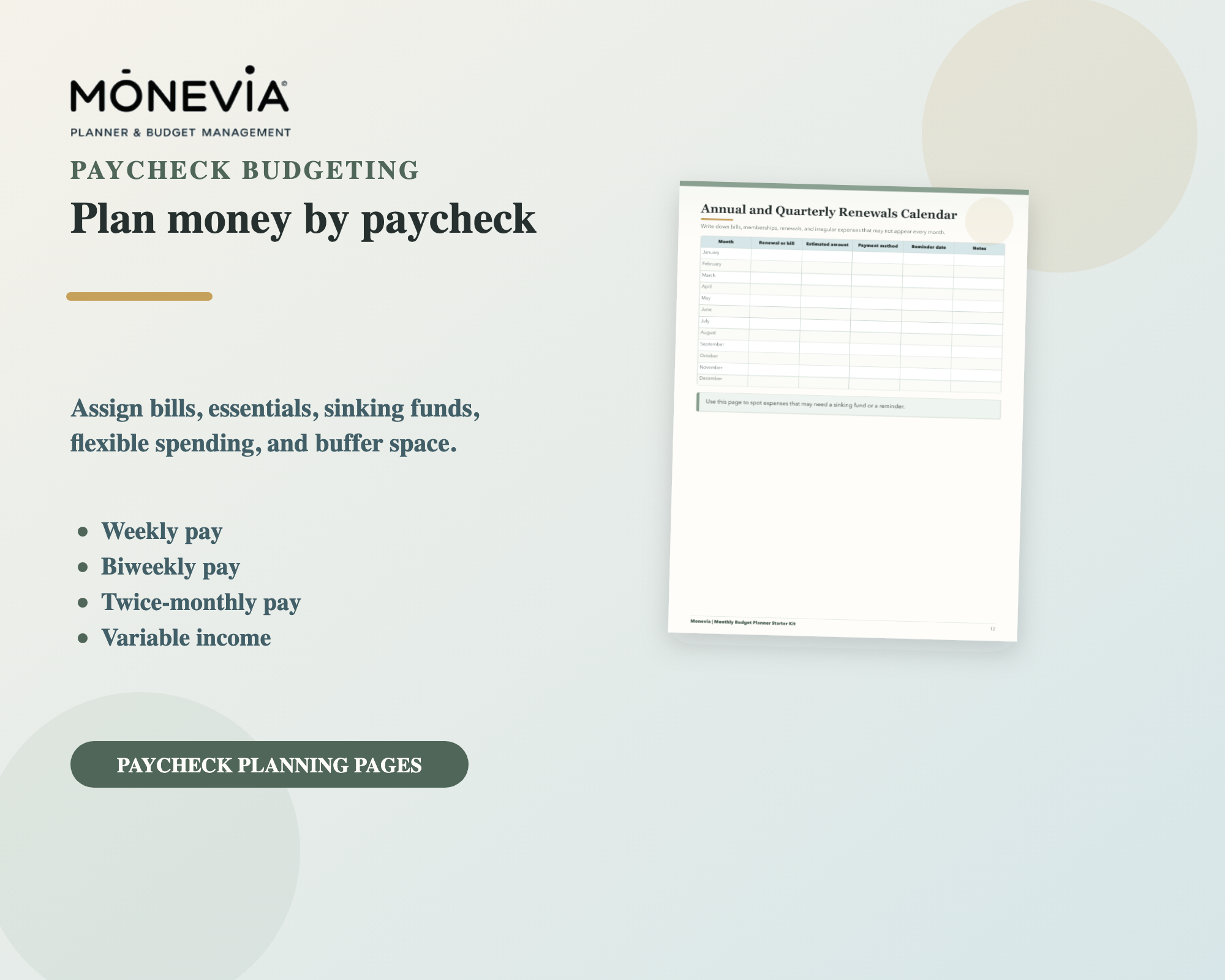
A monthly budget and a paycheck budget are related, but they are not the same thing.
A monthly budget tells you what needs to happen for the whole month. A paycheck budget tells you what each paycheck needs to cover before the next one arrives.
This matters because timing can create stress even when your monthly numbers technically work.
For each paycheck, write down:
- paycheck date
- expected take-home pay
- bills due before the next paycheck
- groceries and essentials needed during that period
- gas or transportation
- sinking fund contributions
- minimum debt payments
- buffer money
This can help prevent the common problem of using the first paycheck too quickly and feeling squeezed before the second one arrives.
Step 4: Review Subscriptions and Renewals
Subscriptions are easy to ignore because many of them are small.
But small recurring charges can quietly crowd a budget, especially when prices increase or annual renewals hit unexpectedly.
During your monthly budget reset, review:
- streaming services
- app subscriptions
- cloud storage
- memberships
- software tools
- delivery services
- annual renewals
- quarterly renewals
Ask yourself:
- Do I still use this?
- Did the price increase?
- Is there an annual renewal coming soon?
- Should this be canceled, paused, or moved into a sinking fund?
Even if you only find one or two subscriptions to cancel, this step can make your budget feel cleaner.
Step 5: Add Sinking Funds for Irregular Expenses
Some expenses feel unexpected only because they do not happen every month.
Examples include:
- car maintenance
- holidays
- birthdays
- school supplies
- pet care
- medical copays
- annual memberships
- home repairs
- clothing replacements
- travel
A sinking fund is money set aside gradually for a specific future expense.
For example, if you know a $240 annual bill is due in six months, you could set aside $40 per month instead of being surprised later.
During your budget reset, choose a few irregular expenses that deserve a line in next month’s plan.
Start simple. You do not need twenty sinking funds right away. Pick the ones most likely to cause stress if ignored.
Step 6: Build a Small Buffer
A budget with no buffer is fragile.
Even a small buffer can help absorb minor changes without throwing off the entire month.
Your buffer might be used for:
- a higher grocery trip
- extra gas
- a small school cost
- a prescription
- a household item
- a bill that is a few dollars higher than expected
If money is tight, the buffer may be very small at first. That is okay. The point is to give the budget a little breathing room.
Step 7: Write Down What Needs to Change Next Month
At the end of the reset, write a short list of adjustments.
For example:
- increase grocery estimate by $75
- cancel one unused subscription
- start a car maintenance sinking fund
- move phone bill to paycheck two
- add a $25 buffer
- reduce restaurant spending goal
- track household supplies separately
This turns the reset into a plan.
Without this step, it is easy to notice problems but repeat the same estimates next month.
Monthly Budget Reset Checklist
Use this checklist as a quick monthly routine:
- Review actual income
- Review actual spending
- Compare grocery and household estimates
- Check upcoming bills
- Check paycheck dates
- Review subscriptions
- Look for annual or quarterly renewals
- Choose sinking funds for irregular expenses
- Add or adjust buffer money
- Write down what needs to change next month
A monthly budget reset does not have to take hours. Even 20–30 minutes can help you make a more realistic plan.
A Printable Way to Do Your Monthly Budget Reset
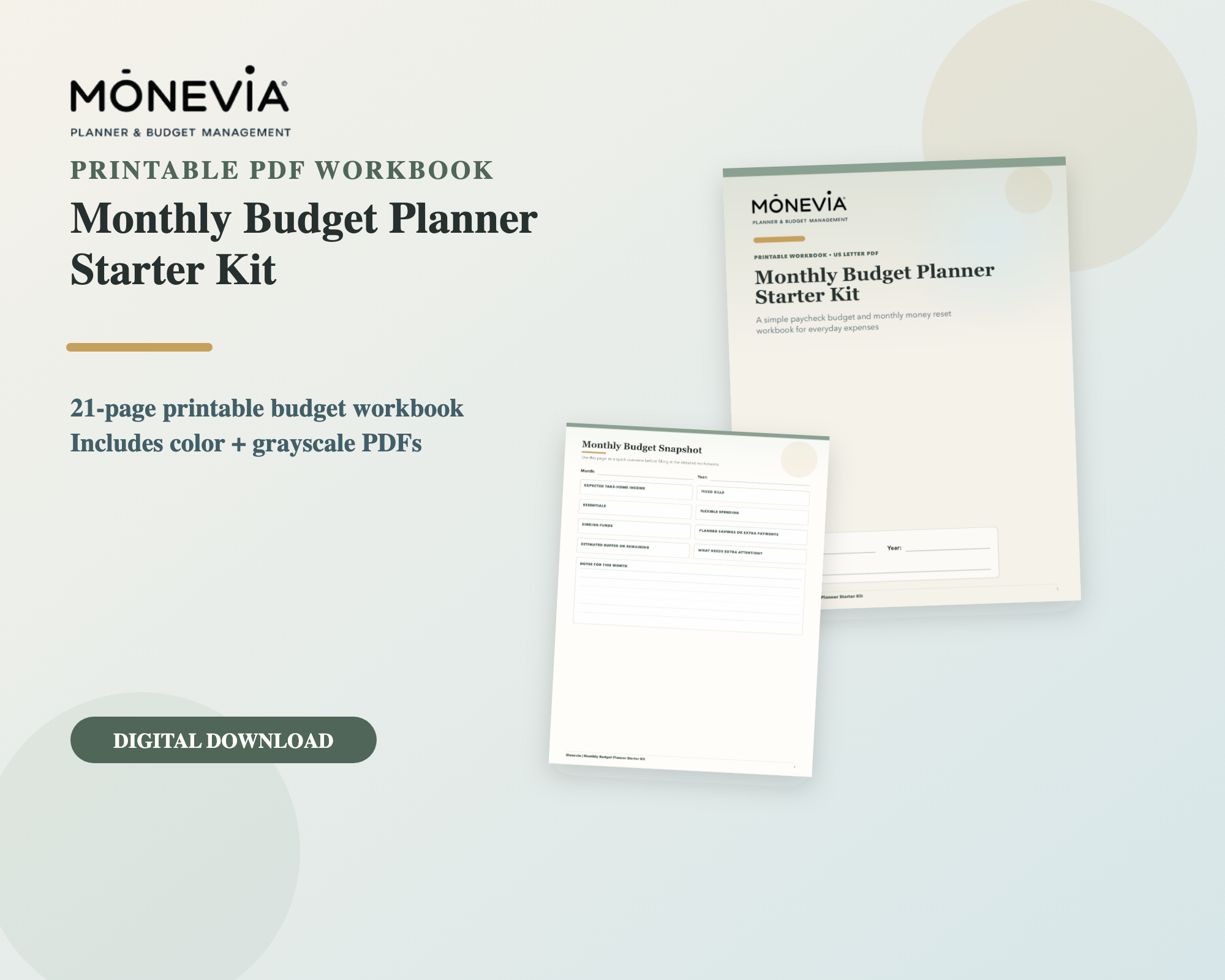
If you prefer writing things down, the Monthly Budget Planner Starter Kit was designed for this exact process.
It includes printable pages for:
- monthly budget snapshot
- income and paycheck tracking
- fixed bills
- essentials estimates
- flexible spending
- sinking funds
- subscription audit
- annual and quarterly renewals
- paycheck budgeting
- weekly spending check-ins
- monthly money reset checklist
- monthly reflection
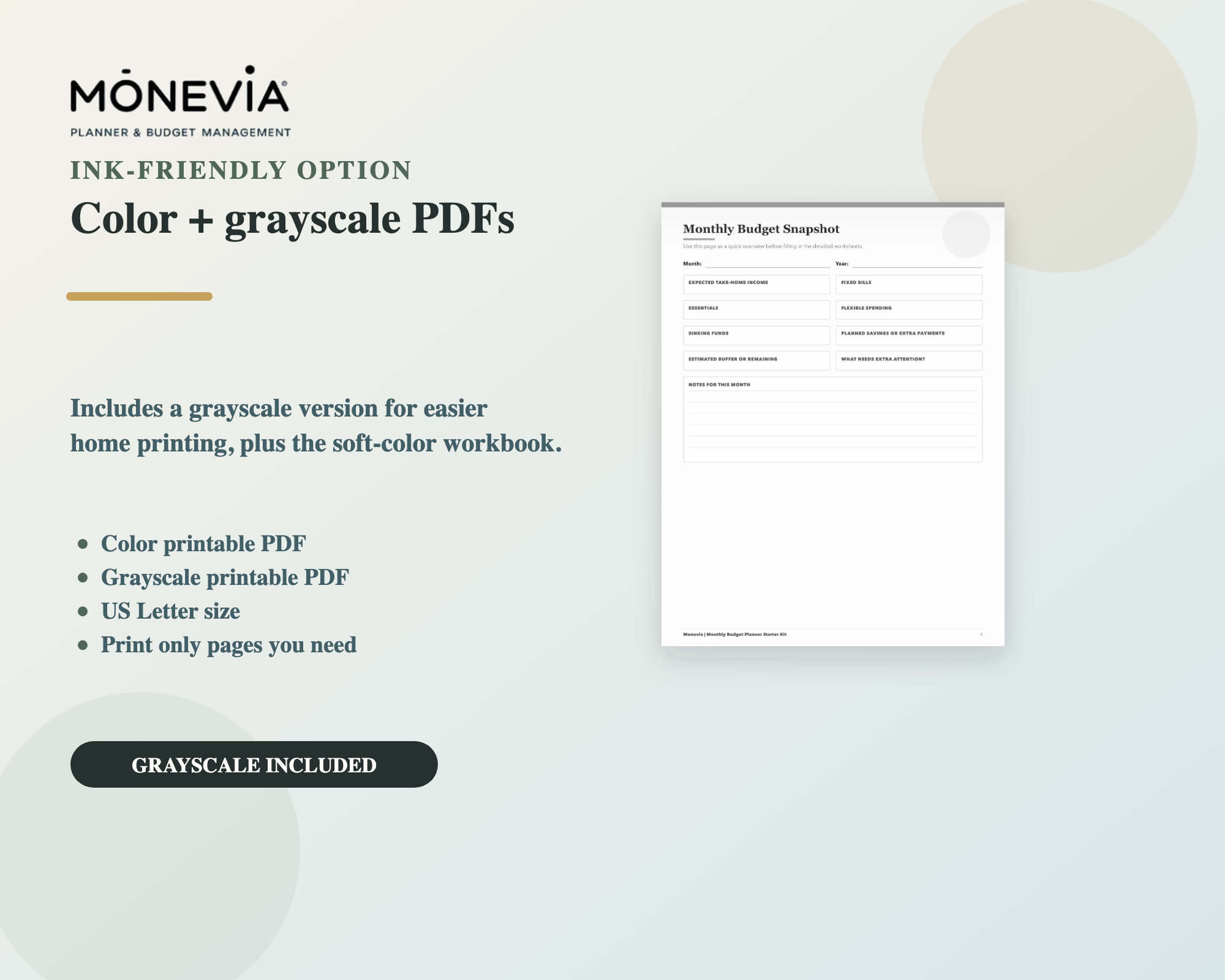
It also includes both a soft-color version and a grayscale printable version.
Final Thoughts
Your budget does not need to be perfect to be useful.
Prices change. Life changes. Paycheck timing changes. The point of a monthly budget reset is to notice what changed and make the next plan more realistic.
A good budget is not a punishment. It is a tool for paying attention, making adjustments, and giving your money a job before the month gets busy.
This article is for educational and organizational purposes only. It is not personalized financial, legal, tax, credit, investment, or debt advice. No specific financial outcome is guaranteed.