How to Plan for Irregular Expenses Before They Wreck Your Budget
Introduction
Some expenses feel like emergencies, even when they are not truly unexpected.
A car needs maintenance. A subscription renews. A school expense pops up. A pet visit costs more than planned. A holiday, birthday, annual bill, or insurance payment arrives and suddenly the monthly budget feels wrecked.
The problem is not always the expense itself. Sometimes the problem is that the expense did not have a place in the budget yet.
That is where irregular expense planning helps.
Instead of waiting for non-monthly costs to surprise you, you can create a simple plan for them ahead of time.
What Are Irregular Expenses?
Irregular expenses are costs that do not happen the same way every month.
They may be:
- annual
- quarterly
- seasonal
- occasional
- unpredictable in amount
- predictable but easy to forget
Examples include:
- car maintenance
- medical copays
- dental visits
- pet care
- school supplies
- holidays
- birthdays
- clothing replacements
- annual memberships
- software renewals
- home repairs
- travel
- insurance premiums
These expenses can make a budget feel unstable if they are not planned for.
Why Irregular Expenses Cause Budget Stress
Most people remember rent, utilities, groceries, and phone bills because they happen often.
Irregular expenses are different. They may not appear for months, so they are easy to leave out.
Then when they arrive, the money has to come from somewhere.
Usually that means pulling from:
- grocery money
- savings
- a credit card
- next paycheck’s budget
- money meant for another bill
This creates a cycle where the budget is always reacting instead of preparing.
Step 1: Make an Irregular Expense List
Start by writing down the expenses that do not happen every month but still show up during the year.
Use categories like:
- car
- home
- medical
- pets
- kids/school
- holidays
- gifts
- memberships
- subscriptions
- travel
- clothing
- personal care
Do not worry about exact numbers yet. The first goal is to remember what exists.
Look back through bank statements, calendar reminders, email receipts, and previous months if needed.
Step 2: Separate Predictable and Unpredictable Costs
Some irregular expenses are predictable.
For example:
- annual membership renewals
- car registration
- holiday gifts
- school supplies
- yearly software subscriptions
Others are less predictable:
- car repairs
- medical visits
- pet emergencies
- home repairs
Both types need a plan, but the plan may look different.
Predictable costs can often be divided by the number of months until they are due. Less predictable costs may need a general sinking fund.
Step 3: Use Sinking Funds
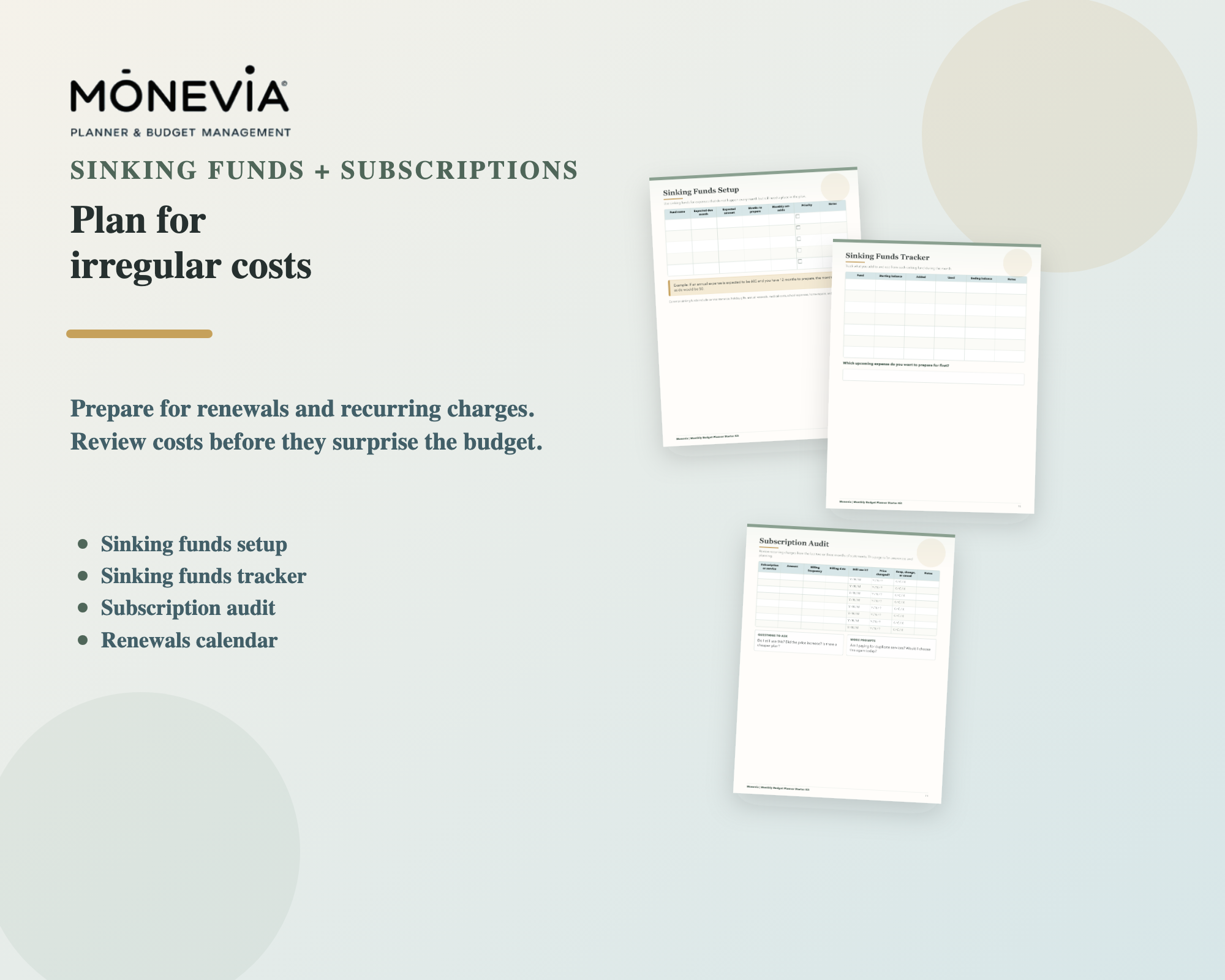
A sinking fund is money set aside over time for a specific future expense.
Instead of trying to cover a $300 expense all at once, you save smaller amounts ahead of time.
For example:
- $300 car maintenance goal
- 6 months to prepare
- $50 per month sinking fund
Sinking funds can be used for many categories, including:
- car maintenance
- holidays
- annual bills
- pet care
- medical costs
- clothing
- home repairs
- travel
You do not need to fund every category immediately. Start with the expenses that create the most stress when they appear.
Step 4: Track Annual and Quarterly Renewals
Annual and quarterly renewals are easy to forget because they do not show up every month.
Create a simple renewals list with:
- renewal name
- due month
- estimated amount
- payment method
- reminder date
- notes
This helps you avoid surprise charges and decide whether a renewal is still worth keeping.
A renewal calendar can also help you spread costs across the year instead of letting several renewals hit the same month unnoticed.
Step 5: Audit Subscriptions
Subscriptions are one of the easiest places for budget leaks to hide.
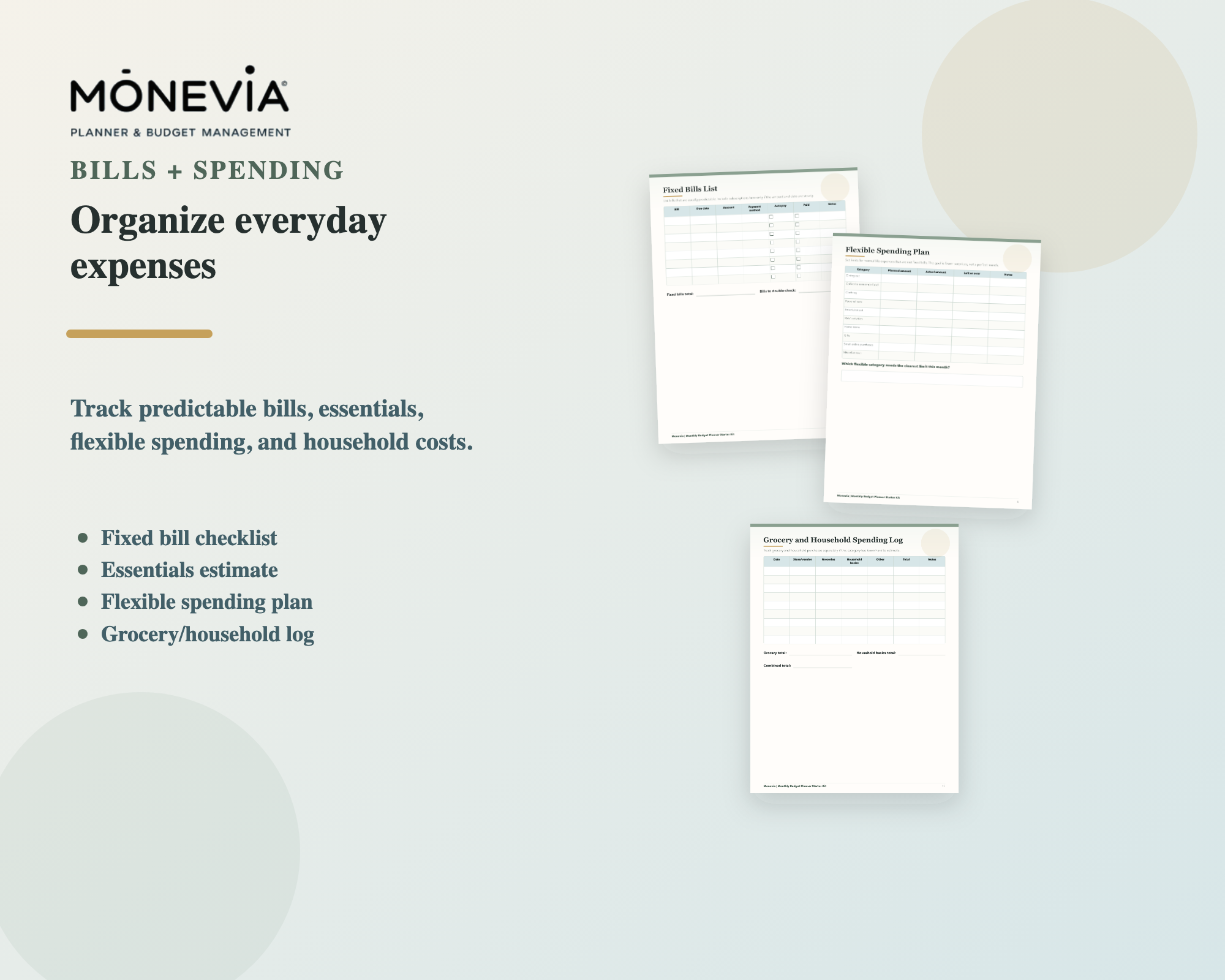
A subscription audit helps you see what is renewing, how much it costs, and whether you still use it.
Review things like:
- streaming services
- apps
- software
- cloud storage
- delivery memberships
- boxes or clubs
- fitness memberships
- paid newsletters
For each one, ask:
- Do I still use this?
- Has the price increased?
- Is there a cheaper plan?
- Should I cancel or pause it?
- Is it monthly, annual, or quarterly?
Even if you keep most of your subscriptions, knowing what they cost makes the budget clearer.
Step 6: Add Irregular Expenses to Your Monthly Budget
Once you know which expenses are coming, add them to your monthly budget plan.
This may look like:
- $40 for car maintenance
- $25 for annual renewals
- $30 for holidays
- $20 for pet care
- $15 for school supplies
These amounts may be small, but they give future expenses a place to go.
If money is tight, choose one or two priority categories first. A partial plan is still better than no plan.
Step 7: Review During Your Monthly Reset
Irregular expense planning works best when it becomes part of your monthly reset.
Each month, ask:
- What annual or quarterly renewals are coming up?
- What sinking funds need attention?
- Did any irregular expense happen this month?
- Does a category need a higher estimate?
- Can I cancel or pause anything?
This keeps the plan current instead of letting it become another forgotten list.
Irregular Expense Planning Checklist
Use this quick checklist:
- List non-monthly expenses
- Separate predictable and unpredictable costs
- Choose sinking fund categories
- Add annual and quarterly renewals
- Review subscriptions
- Estimate monthly set-aside amounts
- Add priority categories to the budget
- Review the list during your monthly reset
A Printable Way to Track Irregular Expenses
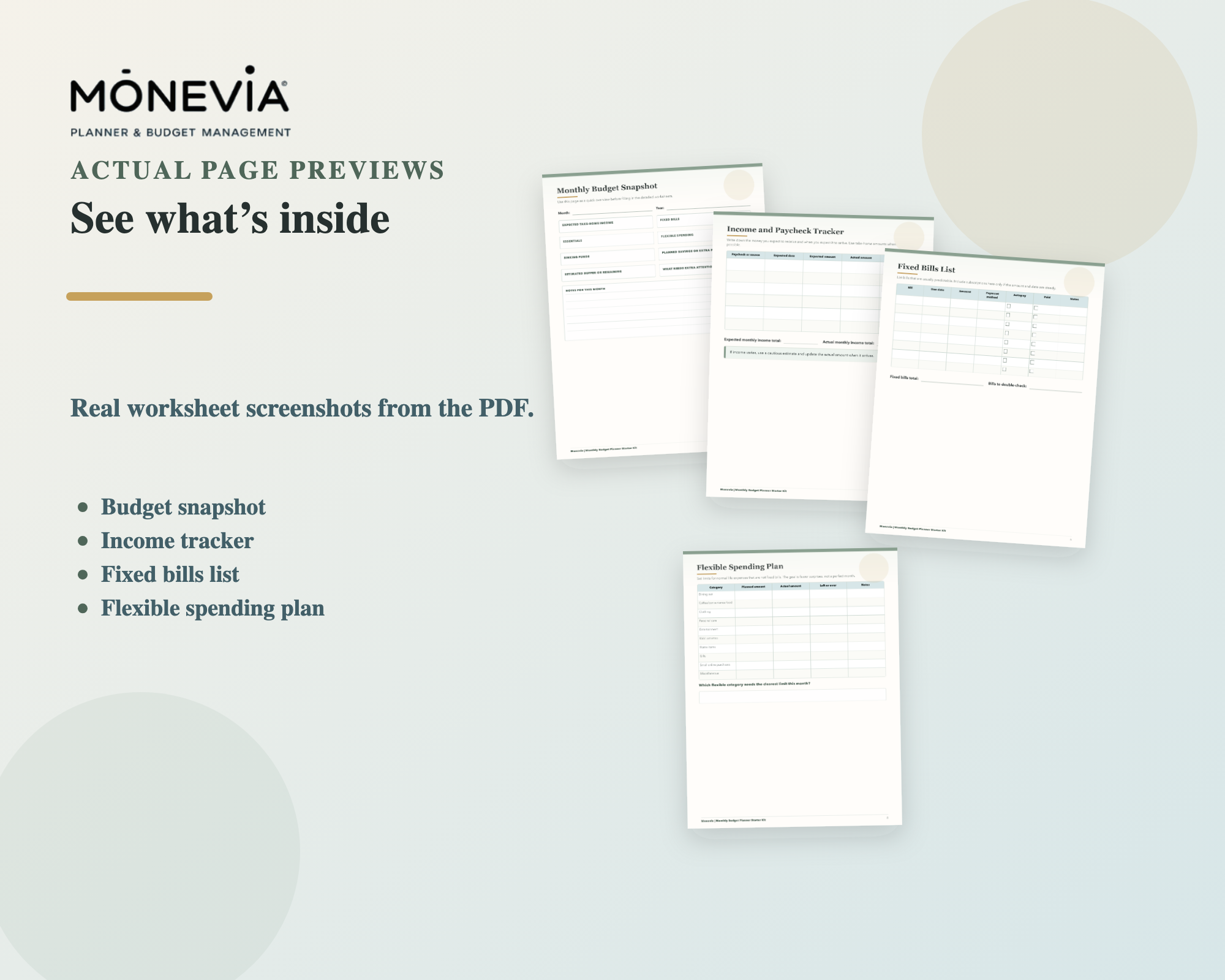
The Monthly Budget Planner Starter Kit includes pages for sinking funds, subscription audits, annual and quarterly renewals, paycheck budgeting, and monthly reset planning.
It is designed to help you see irregular expenses before they interrupt the rest of your budget.
Final Thoughts
Irregular expenses are easier to handle when they are visible.
You do not need a perfect plan for every future cost. Start by noticing what usually surprises you, then give the most important categories a place in your monthly budget.
A budget becomes more useful when it includes real life — not just the bills that happen every month.
This article is for educational and organizational purposes only. It is not personalized financial, legal, tax, credit, investment, or debt advice. No specific financial outcome is guaranteed.